Mocktails, Cocktails, and the Subtle Evolution of Hospitality
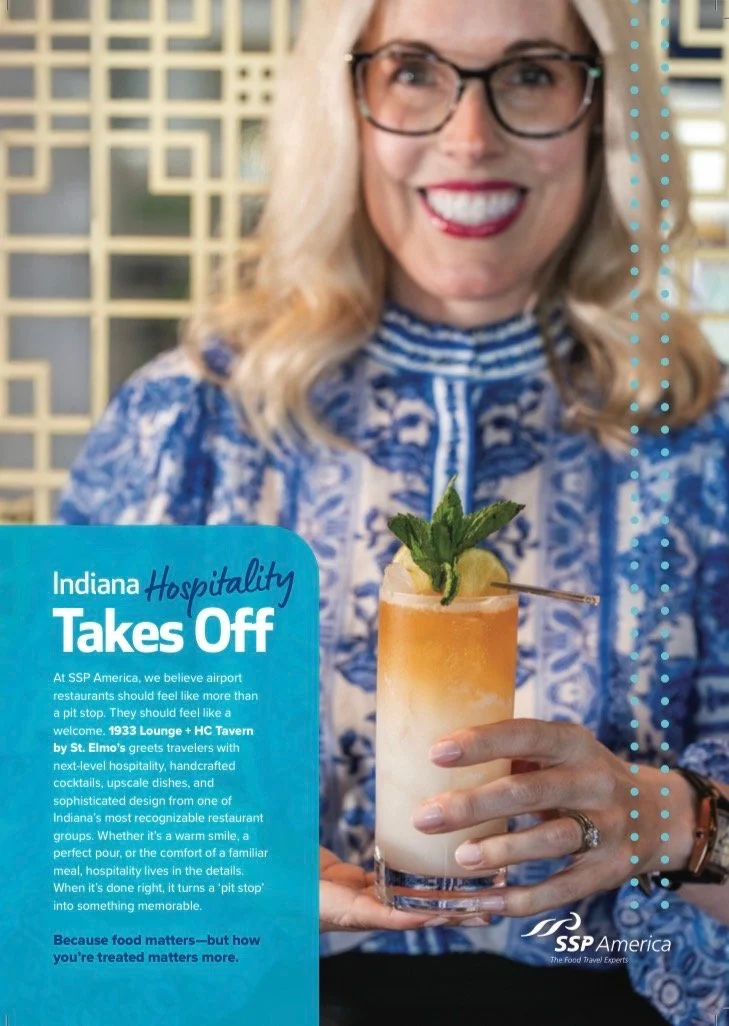
Photo from an SSP America Advert appearing in AXN Magazine featuring 1933 Lounge + HC Tavern by St. Elmo at Indianapolis International Airport.
The Indianapolis Monthly article on mocktails (Jan 2026), Are Mocktails Worth the Buzz?, caught my attention not because it declared a trend, but because it treated the category with nuance. Rather than framing mocktails as a replacement for cocktails, it explored what they signal about evolving guest expectations and the realities behind what ends up on a menu.
To be clear, cocktails and beer remain a beloved part of the hospitality experience. That isn’t changing, and this conversation isn’t about replacing them. For many guests, a well-made cocktail or a favorite beer is part of the ritual. It marks the beginning of a trip, a pause between flights, or a small moment of celebration.
What the article does a particularly good job of surfacing is something many guests may not realize: the zero-proof spirits themselves are often priced in line with premium liquor. A bartender interviewed notes that a well-made non-alcoholic spirit can be comparable in cost to a top-shelf vodka such as Grey Goose. When paired with the care and intention required to craft a thoughtful mocktail, the category looks very different than many assume.
These are not lesser options or placeholders. They are designed experiences, simply without alcohol.
From my background in airport hospitality and wellness and spa, I see this less as an operational shift and more as an evolution in guest expectations. Travelers today want options that feel elevated, celebratory, and inclusive, regardless of what’s in the glass. The expectation isn’t just for an alcohol-free option, but for an experience crafted with the same care and intention.
Travel environments amplify this reality. Guests arrive for many reasons. Early flights, long days, pacing themselves, personal preference, or simply choice. Airports bring all of these motivations into the same space at the same time, which makes thoughtful hospitality even more important.
What’s interesting is that this conversation isn’t really about beverages at all. It’s about how hospitality adapts without overcorrecting. Strong cocktail programs are not under threat. In fact, they provide the foundation that allows thoughtful non-alcoholic offerings to exist comfortably alongside them.
Cocktails continue to provide a beautiful core offering, while mocktails expand the ways we welcome guests.
In an industry where trends come and go quickly, the concepts that endure tend to resist extremes. They don’t abandon what works. They simply make room for more people to feel considered.
And that, to me, is where the real opportunity lives.